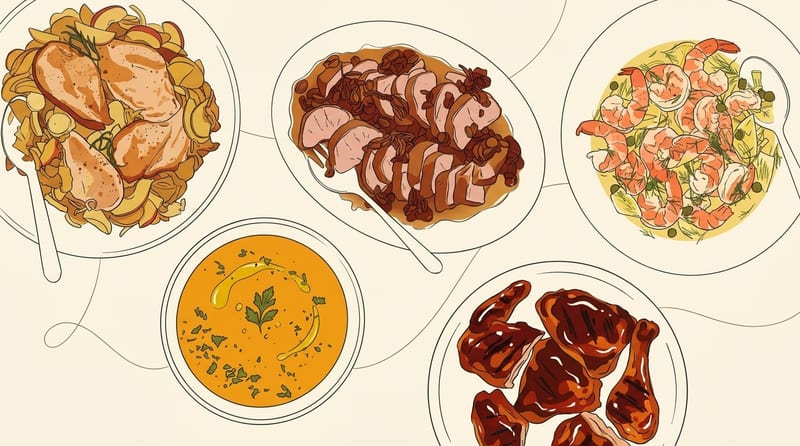
This week is all about fall sweetness and quick stovetop work, with one recipe that asks you to be patient at the grill and another that moves fast enough for a real weeknight sprint. Four of the five dinners land in the thirty-to-forty-five-minute range once you start cooking, while the barbecue chicken wants a longer session with the lid down. Plan for a couple of skillet nights, one slower evening outside or at the grill pan, and one soup that simmers while you do other things.
This Week's Recipes
- Apple Cider Chicken With Apples and Parsnips
- Maple-Shallot Pork Tenderloin
- Sautéed Shrimp With Lemon-Caper Dressing
- Butternut Squash Soup
- Maple Barbecue Grilled Chicken
1. Apple Cider Chicken With Apples and Parsnips
This skillet dinner builds a pan sauce from seared chicken, sweet apples, and earthy parsnips, all reduced in apple cider until the liquid turns syrupy and the vegetables soften into something you can spoon over the cutlets. It is the kind of one-pan fall cooking that makes the kitchen smell like you planned ahead, even when you did not.
At Step 3, after the apples and parsnips have softened in their first splash of cider, pull the kid portion aside before you add the remaining cider, tarragon, and that hefty pinch of salt. For the kid version, use less cider and top it off with water to keep the sweetness from becoming too intense. Skip the tarragon entirely, its anise note is one many children find challenging, and season lightly. Cut the parsnips and apples into small, bite-sized pieces for any child under four. Avoid adding extra salt to the kid portion.
Return the adult skillet to the heat with the full cup and a half of cider, the tarragon, and a robust pinch of salt. Let it bubble and reduce until the liquid thickens and clings to the vegetables, then nestle the seared chicken back in for a final simmer before a quick pass under the broiler. The result is complex and slightly sweet, with the tarragon lending an unexpected lift to all that fall fruit.
The Split: Adults get full cider reduction with tarragon; kids get milder sauce with less cider.
Serves: 2-4 | Time: 45m | NYT Cooking →
2. Maple-Shallot Pork Tenderloin
Pork tenderloin roasts in under half an hour, which leaves you free to reduce maple syrup, vinegar, shallots, and raisins into a glossy agrodolce that drapes over the sliced meat like a condiment worth making extra of. The sweet-sour balance is sophisticated enough for adults but easy to tilt toward maple for younger palates.
At Step 3, when you start the agrodolce, set aside a smaller saucepan for the kid version. Use more maple syrup and pull back on the sherry vinegar so the glaze stays sweet without the sharp edge. Skip the raisins entirely for any child under four, or chop them very finely if you do include them. Keep added salt out of the kid portion.
Let the adult saucepan reduce with the full measure of vinegar, so the finished sauce has that proper sweet-tart snap that cuts through the richness of the pork. Any extra sauce keeps well and works beautifully on roasted fish or grilled vegetables later in the week.
The Split: Adults get balanced sweet-sour agrodolce; kids get maple-forward glaze.
Serves: 4 | Time: 35m | NYT Cooking →
3. Sautéed Shrimp With Lemon-Caper Dressing
This is a harder sell for kids, and it is worth saying that upfront. Shrimp with a concentrated lemon-caper dressing, raw garlic, and crushed red pepper is a bold plate, the kind of thing that divides younger eaters sharply into yes or no camps before a single bite. The good news is that the shrimp themselves cook quickly and keep their mild sweetness, so there is room to build a bridge.
At Step 2, every shrimp is seasoned with salt and crushed red pepper, so the kid portion will already carry a little heat. At Step 4, before you toss the warm shrimp into the dressing, pull the kid portion onto a separate plate. Finish those shrimp with a squeeze of lemon and a spoon of the olive oil from the pan. Leave the capers, dill, and raw garlic in the dressing bowl. Shrimp is a major allergen, so keep cross-contact with other seafood in mind, and keep the lemon you serve alongside out of the dressed bowl.
Toss the remaining shrimp in the full dressing, letting the warm shellfish absorb the lemon, capers, dill, and a faint heat from the red pepper. The dressing mellows slightly as it sits, so this is also a dish that works at room temperature or even chilled the next day, which makes the adult portion feel like a deliberate leftover rather than an afterthought.
The Split: Adults get full lemon-caper dressing; kids get lemon on pepper-seasoned shrimp.
Serves: 2-4 | Time: 30m | NYT Cooking →
4. Butternut Squash Soup
A smooth butternut squash soup is one of the most reliable ways to put fall vegetables in front of children without negotiation, especially when the final bowl is velvety and slightly sweet with no visible green. This version starts with onion and squash, then splits before the assertive aromatics join the pot.
At Step 2, after the squash has softened with the onion, scoop out the kid portion into a separate smaller pot. Add vegetable broth to that pot and let it simmer until the squash is completely tender. Keep garlic, sage, rosemary, and ginger out of the kid version entirely. Puree the kid soup until completely smooth so fibrous bits are not a choking risk.
In the main pot, add the garlic, sage, rosemary, and ginger, letting them bloom for just under a minute before you pour in the broth. The adult soup will carry all those warm, resinous notes that make butternut squash feel like a grown-up dish, while the kid version stays mild and creamy and approachable. Both soups get the same final puree, so the texture is identical even when the flavor diverges.
The Split: Adults get garlic, sage, rosemary, and ginger; kids get smooth squash in plain broth.
Serves: 6 | Time: 45m | Love and Lemons →
5. Maple Barbecue Grilled Chicken
Grilled chicken with a sticky maple barbecue glaze is the kind of dinner that feels like a weekend project even when it comes together on a weeknight. The sauce simmers ahead with garlic, tomato paste, maple syrup, soy sauce, Worcestershire, and vinegar, so the work at the grill is mostly basting and turning while the glaze caramelizes and chars in spots.
At Step 2, when you move the chicken to indirect heat, split your basting strategy. For the kid pieces, use the maple-soy base sauce without the Sriracha, or skip basting entirely and serve the mild sauce on the side for dipping. The sauce is made in Step 1, so you can set aside the kid portion before the heat goes in. Breast pieces are done at 160 degrees and dark meat at 165, for the kid chicken and the adult pieces.
Baste the adult chicken with the full Sriracha-spiked sauce, turning and glazing until the outside is lacquered and slightly charred. The sweet heat builds in layers, and the reserved sauce at the table lets each adult control their own intensity. This is a dinner that rewards patience at the grill, so plan for a longer evening with the lid down and a drink in hand.
The Split: Adults get Sriracha-spiked maple barbecue glaze; kids get mild maple-soy base.
Serves: 4-6 | Epicurious →
Start with the butternut squash soup if you want the most forgiving entry point. The split at Step 2 is clean and early, and a smooth, mild bowl of squash feels like fall comfort without any tableside negotiating.
Every Sunday
Get next week's menu.
Five recipes, kid-friendly notes, and one grocery list — straight to your inbox.